Catching the wind

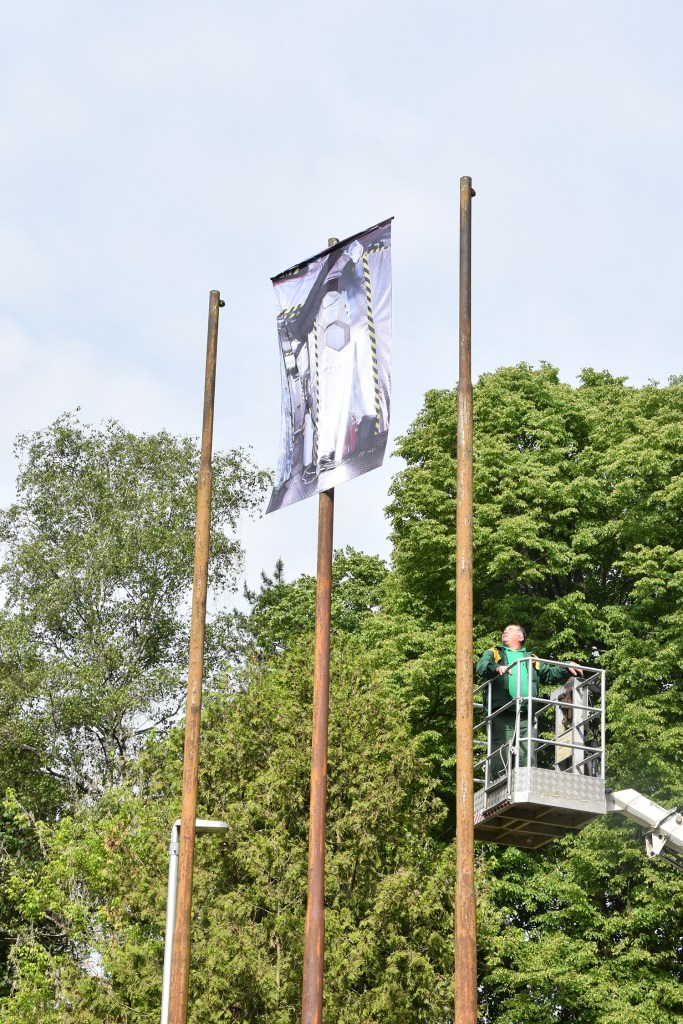
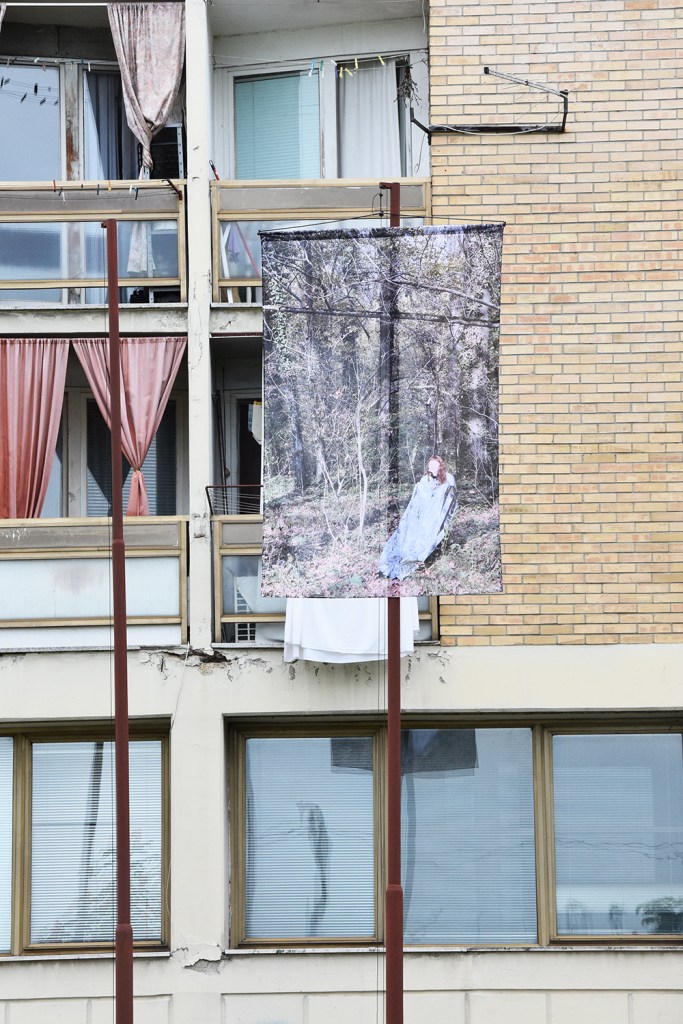
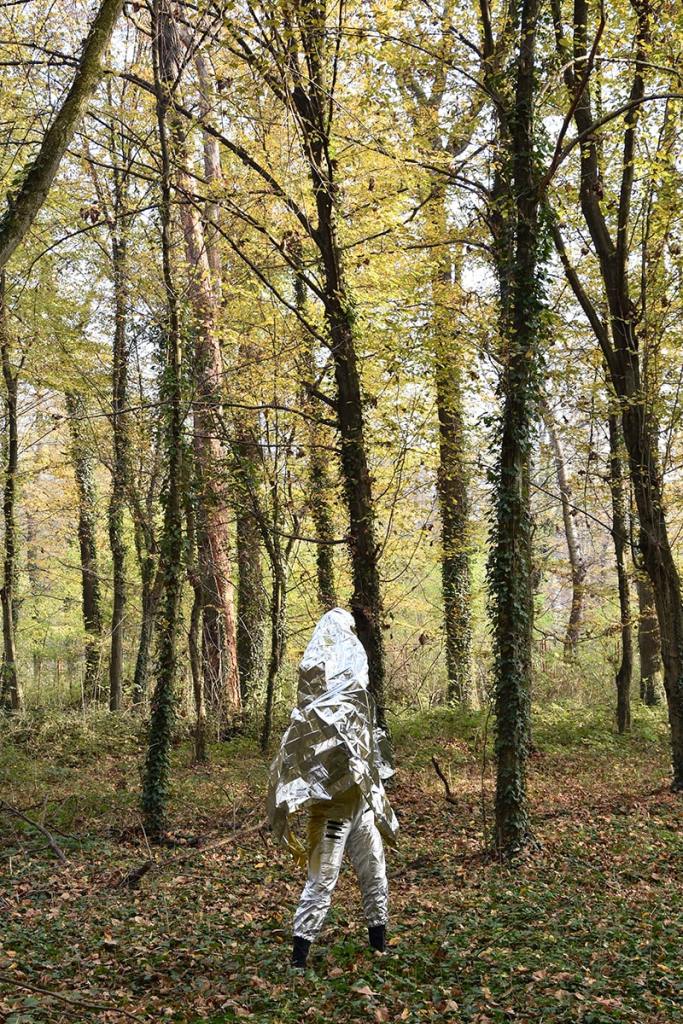
“Catching the Wind” project builds on previous artistic explorations that focus on the intersection between human interaction with the Earth and broader ecological concerns. A significant influence comes from the project “Astronaut(s) Without a Spaceship”. The core idea of “Astronaut(s) Without a Spaceship” is a reflection on the Earth’s need for its own kind of terraforming, suggesting that the exploitation of Earth’s resources should give way to efforts focused on regeneration and sustainability. Through this process, the fragility of the Earth’s surface was explored, leading to a deeper investigation into the connections between terrestrial ecosystems and human bodies.
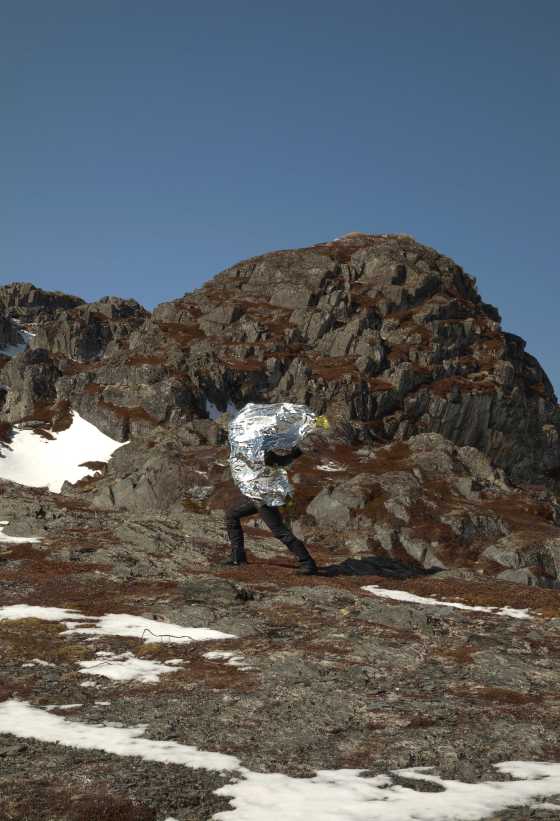
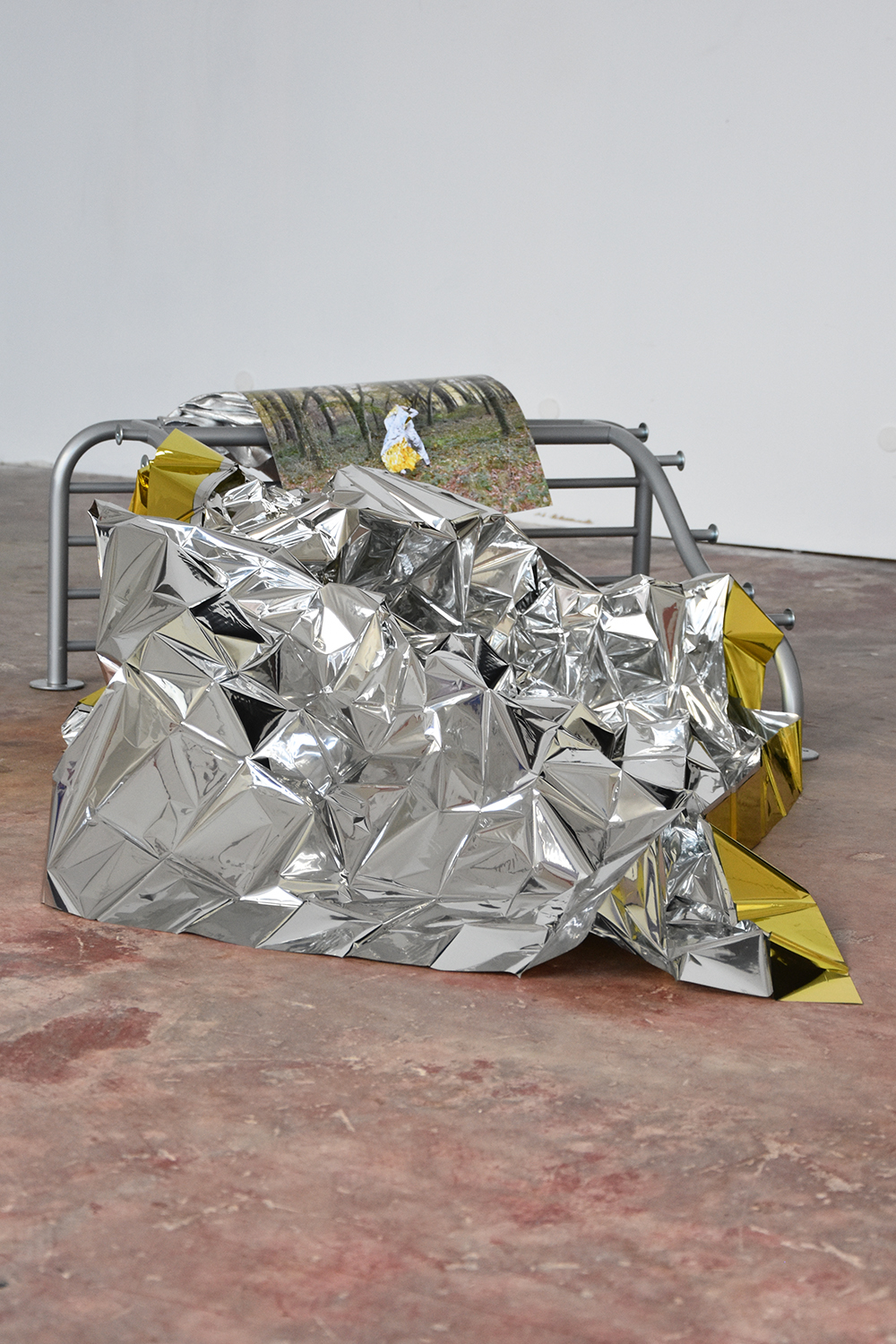
The performance, set in the terrain of Finnmark near the Kjølnes Lighthouse, centered on the concept of a wind research station. It transforms the wind’s motion into movements, embodying the principles of wind behavior and making the invisible forces of nature both visible and tangible. This work explores the intricate and dynamic relationship between humans and nature.
The choice of materials and the specific interactions capture the raw force and majesty of Finnmark’s landscape, effectively using the human form and man-made elements to highlight environmental themes and the impact of wind as a natural force.
The project integrates ecofeminism and postcolonial theory to critique exploitative practices and promote respectful, sustainable interactions with the landscape, fostering a more intuitive and empathetic approach to environmental stewardship.


https://kulturpunkt.hr/podcast/audio/audio-vodstvo-astronauti-bez-svemirskog-broda-hvatanje-vjetra-ivane-tkalcic/

technical description

year: 2024
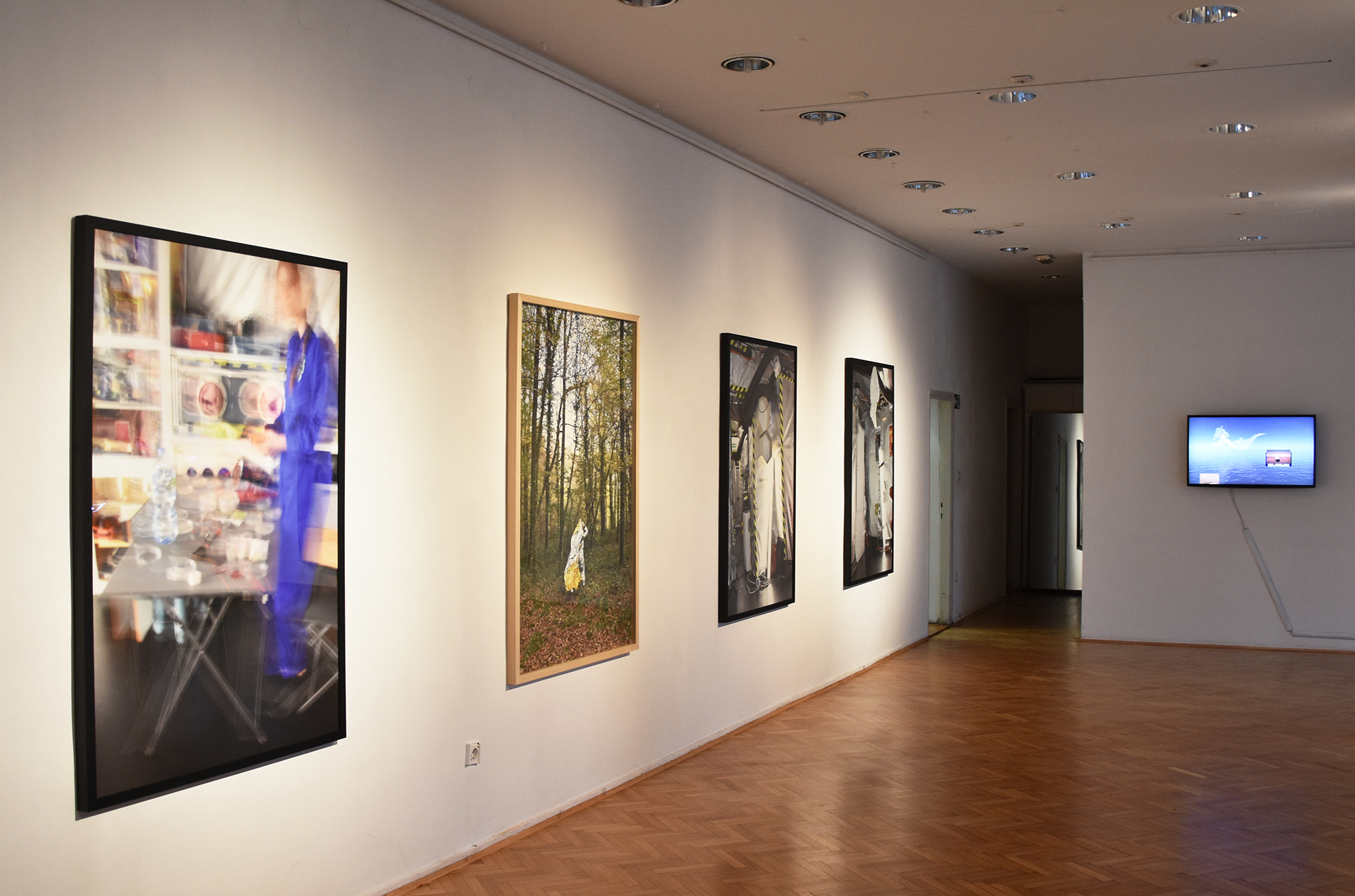
performance documentation, which includes:
2 x digital print, 150 x 100 cm
3 x digital print, 110 x 74 cm
2 x digital print, 50 x 34 cm
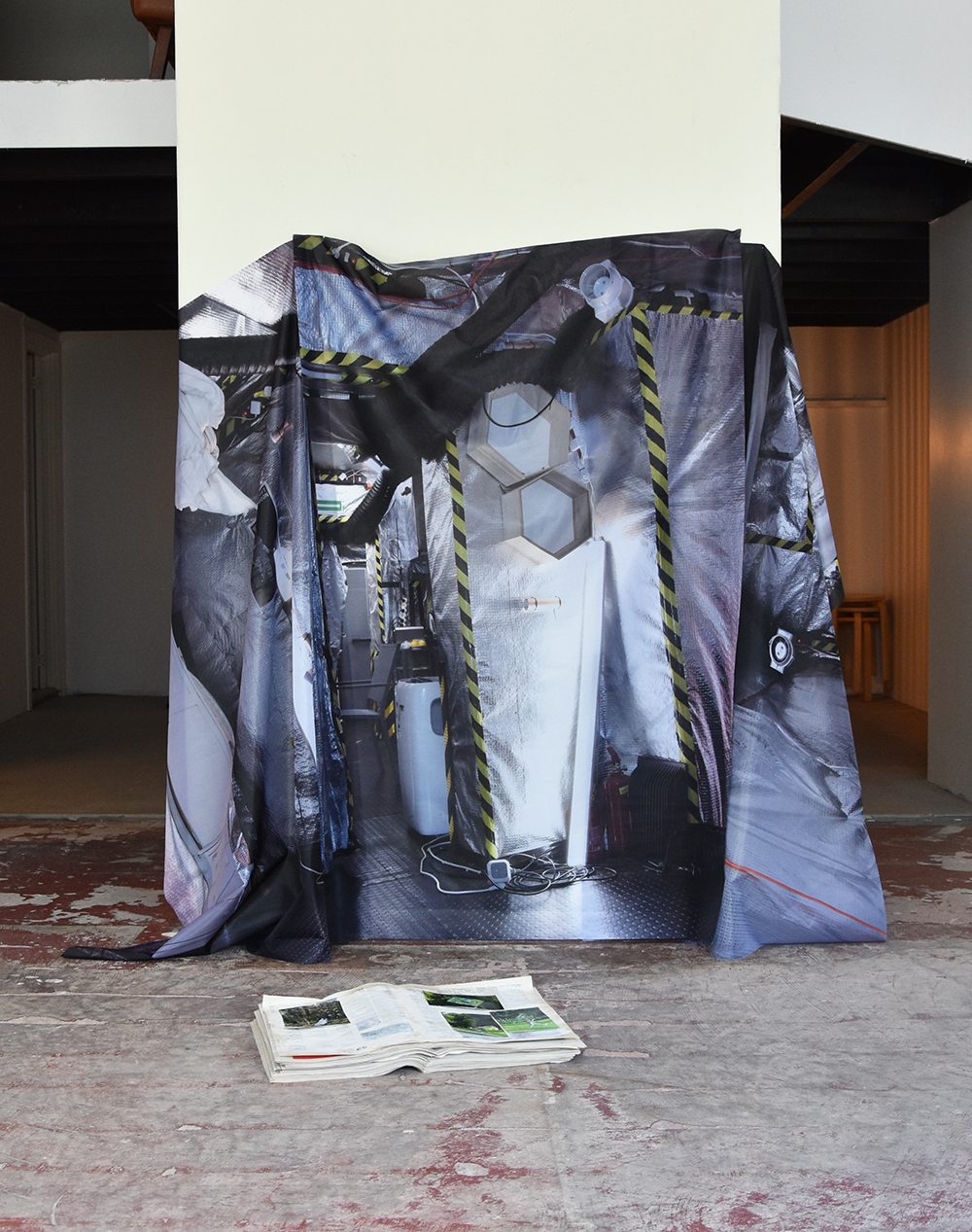
print on textile, 225 x 150 cm
video, loop, 5’18’’

2024 Hyperborealis, Kvitbrakka AiR, Berlevåg Havnemuseum, Berlevåg, Norway, performance documentation

📷Daria Klima, Nagore Chivite

2024. Catching the wind, [PROSTOR], CHC, Split, Croatia

📷Glorija Lizde

Moonwalker(s) training

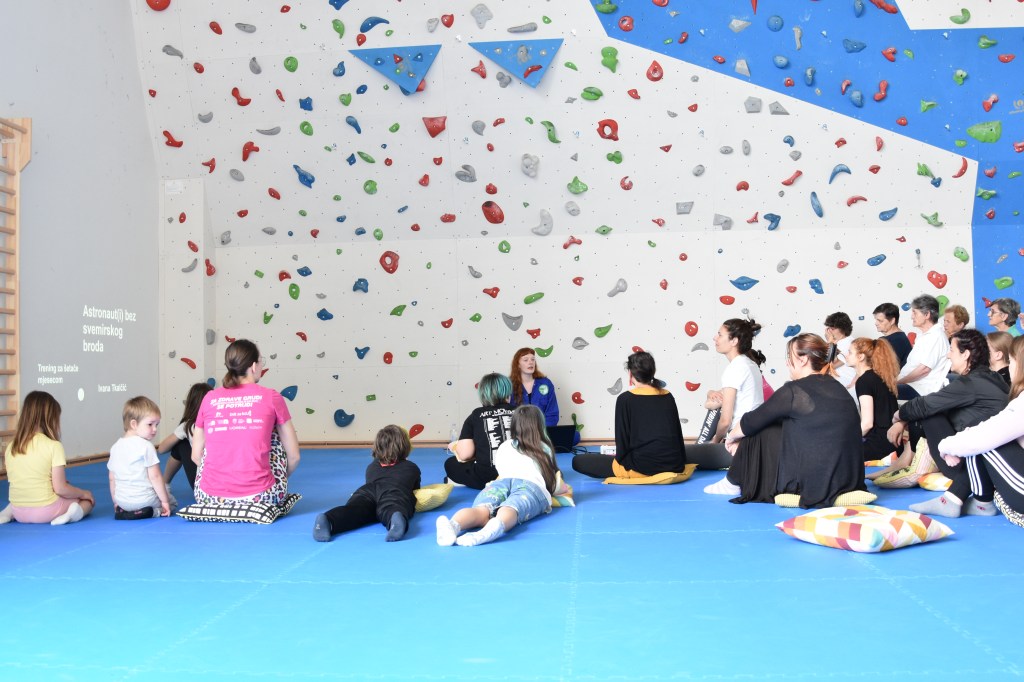
The “Moonwalker Training” workshop, an extension of Analog Astronaut Training, focuses on sustainable energy use during stressful situations by facilitating body terraforming. This unique workshop combines physical and mental exercises for aspiring Moonwalker(s).

Moonwalker(s) Training workshops educate and inspire participants to prepare their bodies for an improved life on Earth, drawing from Analog Astronaut Training experiences.

Each workshop lasts approx. 160 minutes, allowing immersion in the experience, originating from a previous project – “Astronaut(s) without a spaceship” which explores the motives and consequences of the space race, with ethical, political, and environmental implications.

During my training in the Analog Astronaut Training program in Poland in August 2022, I realized the importance of own sustainable energy use and conservation. The physical and mental exercises that are learned at the workshop helped me to better support my AAT crew and contributed to a successful lunar mission.

technical description

year: 2023

performative workshop

duration: 160 minutes

2023. Moowalker(s) training, Artistic dictionary of public space, Open art studio and City Gallery Striegl, sports hall “Zeleni brijeg”, Sisak, Croatia

2023. Moowalker(s) training, Artistic dictionary of public space, Open art studio and City Gallery Striegl, Sisak, Croatia

Astronaut(s) without a spaceship

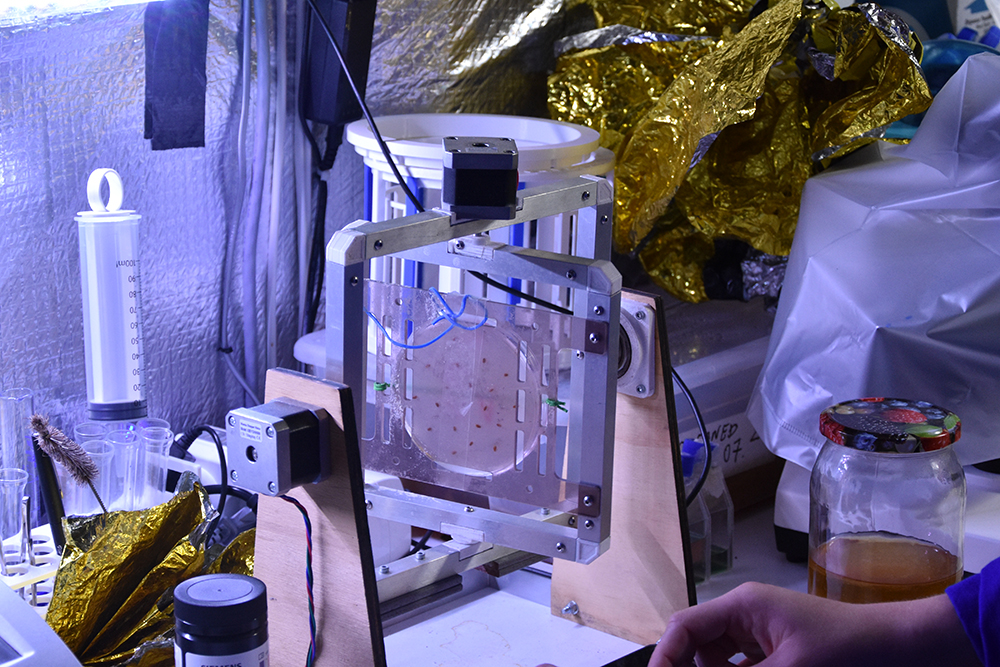
The concept of this work is related to space exploration/exploitation. One of the focuses is also the term terraforming (a hypothetical process of atmospheric, temperature, topographic, or ecological adaptation of a celestial body to the conditions of life on Earth) and its use when talking about planet Earth in relation to other heavenly bodies. There is a discussion about terraforming the Moon or Mars, but soon we will need to “terraform” Earth.
In the past 10 years, space exploration and traveling have again become a big topic with many discussions, from statements like we need to be multiplanet species to asteroid mining. There is a noticeable increase in this space race, not only between nations but also between private companies.
What is the logic behind the new space race? For whom will this “new world” on Earth or some other astronomical body be built? How far can the exploitation of resources on and around Earth be stretched?
My interest in “space exploration” began around 2019 when I stumbled upon a document about the establishment of a Centre for Space and Innovative Technology in my hometown – Sisak.
As part of my first reflection on my hometown’s space agency, I have done and documented several performances realized in my hometown’s forest near the former Iron factory and the Oil Refinery.

2021 performances were realized in Sisak-Caprag’s forest near the former Iron factory and the Oil Refinery

Thinking about possibilities where space exploration and exploitation can lead us, I received the opportunity to participate in a program called Analog Astronaut Training Centre as part of ESA’s ILEWG EuroMoonMars initiative.

2022, EMMPOL Poland, Analog Astronaut Training Center, Poland

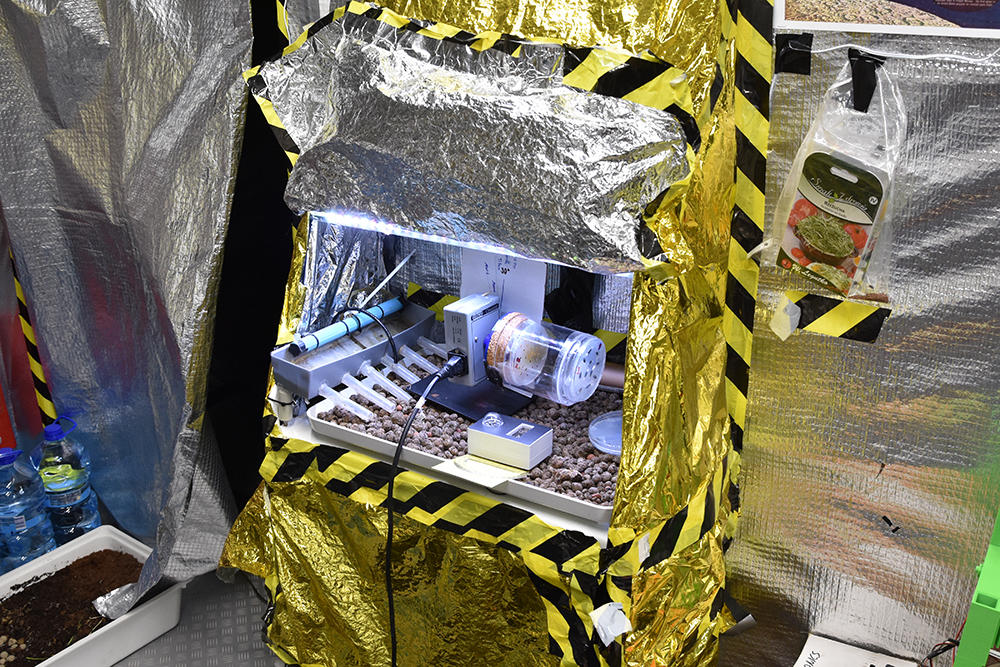
In August 2022, I was part of Analog Astronaut Training in Poland. I saw my participation there as a weeklong performance, in a way infiltrating the (all-scientist) crew, but also as an observer who learns from fellow scientists and records everyday events and experiments on the site.

2022. EMMPOL Poland, Analog Astronaut Training Center, Poland

2023. Project PIAQ5454: Do we need art in space? , Gallery VN, Zagreb, Croatia

2022. Astronaut(s) without a spaceship, gallery Palmera, Bergen, Norway

technical description

year: 2022/2023

storytelling installation, which includes:
12 x digital print, 100 x 150 cm
6 x digital print, 30 x 20 cm
13 x print on textile – flags, 150 x 225 cm
video, loop, 2’48’’

Steady movement (one of forests, three of birds)

Steady movement is a mixture of forest and bird datasets with a tendency for slow reshaping. Containing one symbolically fixed element (tree-forest) and three symbolically movable elements (birds), it shows desire for movement but under fixed parameters.

The result of two opposite forces (movement and steadiness) is an in-between state, a rift into the unknown, but also a possibility for transformation into something new.

2020. Drei Tage bis zum Ende der Kunst, WHW Akademija, Galerija Nova, Zagreb, Croatia

“The exhibition Drei Tage bis zum Ende der Kunst is the result of a seven-month journey within the WHW Akademija module Conversation about the Trees (conceived and led by Ana Dević). Focusing on issues such as resistance, resilience, and collectivity, the module used the motif of trees and forests as a metaphor through which main lines of inquiry branched out into different topics and artistic practices, as found in the Kontakt Collection.”

https://akademija.whw.hr/posts/on-the-other-side-of-the-closed-door
https://akademija.whw.hr/posts/drei-tage-bis-zum-ende-der-kunst
https://akademija.whw.hr/posts/conference-of-the-birds

technical description

year: 2020.

installation, which includes:

video, loop,01’06’’

7 x stickers, digital print, 14 x 14 cm

2 x stickers, digital print, 9 x 9 cm

10 x plants

program used: RunwayML, model used: StyleGAN, datasets used: Caltech-UCSD Birds 200 (CUB-200) – 6033 images and Forest (RunwayML forest dataset) – 2330 images

Steady-movement-one-of-forests-t

2020. Drei Tage bis zum Ende der Kunst, WHW Akademija, Galerija Nova, Zagreb, Croatia

📷 Damir Žižić; Vlad Brăteanu; Ivana Tkalčić
Why Am I Seeing This?

Images have always been with us, including the image of the world. At different times and in different places there are different images of the world, and that is why history and comparative anthropology are not just descriptions of events and practices, but representations of events and practices.

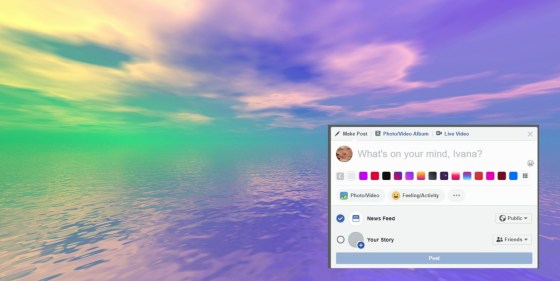
The notion of “the real” is even more debated in an era when the highly-optimized interaction loops, a personal news feed, bots, automatically generated content, fake news, the possibility to immerse into augmented reality, and ever-getting smarter AI is challenging the very nature of “reality” and shaping new conditions of human perception.

Information, Communication, and Technologies (ICT) are affecting who we are, how we socialize, our concept of reality (our metaphysics), and our interaction with reality, but how are the ICT shape human perception (while we humans shape technologies) and into what?

Worldwide human life is redirected to the online world, where a new worldview is being produced by making, watching, and circulating data in enormous quantities.


Networks have redistributed and expanded the viewing space, but most of the digital platforms that we use every day are not only collecting the information about us as users but also are filtering all the accessible information according to „our“needs, and showing us the material they think would be of our best interest.  We, as users may have the feeling of the useful personalized everyday landscape, individual decision making, and freedom of choice, but all that can be part of our own personal bubble world, a comfortable illusion.

The problem with bubble vision is that users are in intellectual isolation, in a so-called “parallel information universe”, which feeds itself. As a result, users become separated from information that disagrees with their viewpoints, effectively isolating them in their own cultural or ideological bubbles.

The information and the image that we see are becoming our perception of the world, our point of view, and understanding of reality – the foundation for thought and action.

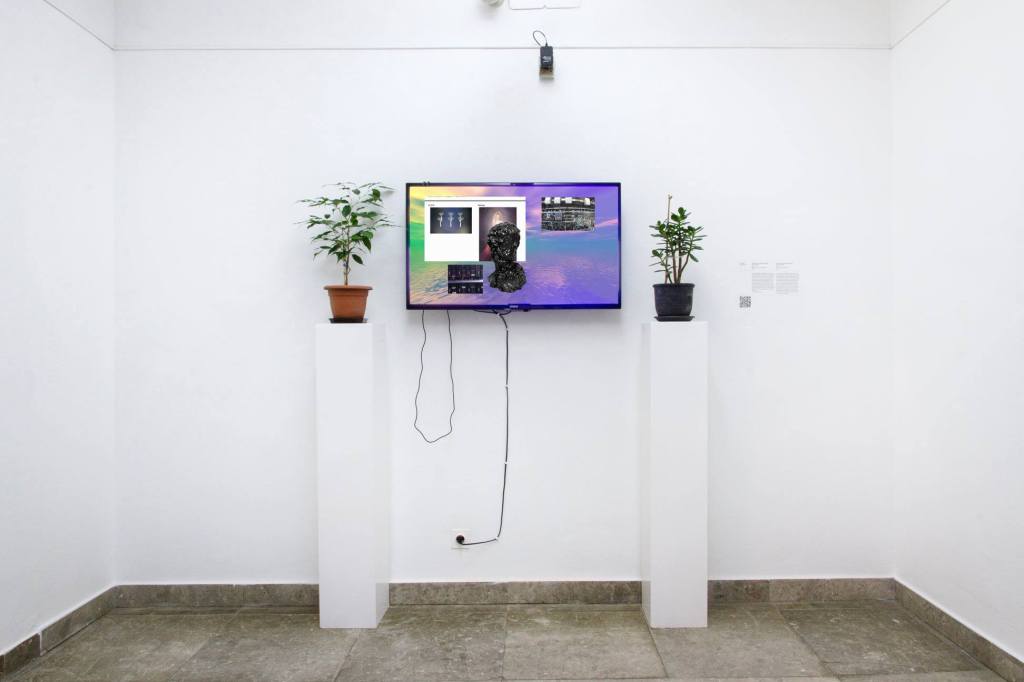
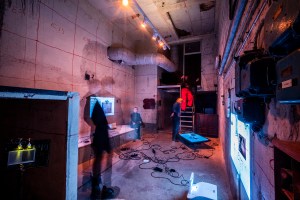
2024. myriad, re|thread, Reactor Hall R1, Stockholm, Sweden
📷Happy Wilder, Martynas Justinevicius
https://www.kulturpunkt.hr/content/o-zaigranosti-i-ozbiljnosti-tehnologije
technical description

video installation, which includes:
4 x synchronized videos, loop, 09’30’’

The project was created in collaboration with scientists from the Joint Research Centre, European Commission in Ispra, Italy; Ian Vollbracht, Stephane Chaudron, Nicole Dewandre, and curator Freddy Paul Grunert.

vlcsnap-00014

Twilight zone, snapchat, camera, text to speech

Today in the ever-changing world of quick shifting realities, the comprehension of what we think we know about the world is changing rapidly. In the past ten years the development of technology speed up exponentially. Did this change been for easier and better for living? Or is technology changing and reshaping our consciousness and ways of thinking which cannot yet be imagined?

Our perception and an experience of the world undoubtedly changed. Just look at our daily online communication. Nowadays it’s not only happening through text but also through images, videos, GIFs, twitter posts, blogs, games, Skype and group chats. Even if we’re far away from our friends and relatives we can still connect instantly and vividly as almost being physically present. But all that information is leaving a digital footprint that can be followed to the source and potentially misused.

We are transiting into a post-information and post-human age that is radical transformation our way and nature of living, being and understanding the world that surrounds us. Furthermore, on a personal scale, the boundary between online and offline life has disappeared. The most intimate part of our lives have become slice of virtual world that draws the strength from the media. How has the everyday online – offline interaction changed the experience of the world around us and influenced our daily visual perception?

Twilight zone, snapchat, camera, text to speech (2018) from Ivana on Vimeo.

This project was realized as part of the Summer Sessions Talent Development Network and is a coproduction of Metamedia Association and V2_Institute for unstable media.

IMG_20180907_1513212018. Summer Sessions 2018 (Kunstavond XL), V2_ Lab, Rotterdam, Netherlands

2020. 27. SLAVONSKI BIENNALE, Osijek, Croatia

technical description
year: 2018
video, loop, 3’11’

Paradise now_

The term hyper-reality marks a new concurrence of circumstances in which disappears every tension between reality and illusion, between reality as it is and as it could be.

Time and space, drastically compressed by the computer, have become interchangeable. Time is compressed in that once everything has been reduced to ‘bits’ of information, it becomes simultaneously accessible. Space is compressed in that once everything has been reduced to ‘bits’ of information, it can be conveyed from A to B with the speed of light. As a result of digitization, everything is in the here and now. The information on whole world is on internet and salvation is just a WIFI away.

Do we look at the world with the same eyes as our ancestors? How has the way we see reality changed due to technology, media and screens?How is our relationship with technology? Do we live through technology? Did we find the long-awaited utopia in virtual reality or does the virtual reality amplify society’s hysteria and schizophrenia, lowering focus and awareness?

The notion of “the real” continues to be hotly debated in an era when the internet, virtual reality, cyber theory, and bioethics challenge the very nature of “reality”.

video still (2)

videos_    01 , 02 , 03 , 04

  1. Paradise now_, gallery Izidor Kršnjavi, School of Applied Art and Design, Zagreb, Croatia
  2. Paradise now_ _twilight zone, snapchat, camera, text to speech, Gallery Kazamat, Osijek, Croatia

📷 Ivana Škvorčević

technical description
installations and video installations, which include:
digital print on silk, 400 x 500 cm
4 x digital print on satin, 115 x 170 each
video, loop, 4’46”
video, loop, 6’17”
video, loop, 3’29”
video, loop, 5’20”